EPA 608 Certification Types: Type I, II, III & Universal (and Which Your Techs Need)
EPA Section 608 has four certification types. Here's exactly what Type I, II, III, and Universal each cover, and which one your HVAC techs actually need.
Hiring a new tech, or sending someone out to buy refrigerant, and not sure which EPA 608 certification they actually need? Get it wrong and it’s not a paperwork problem, your tech legally can’t service the equipment, and may not even be able to buy the refrigerant to do the job.
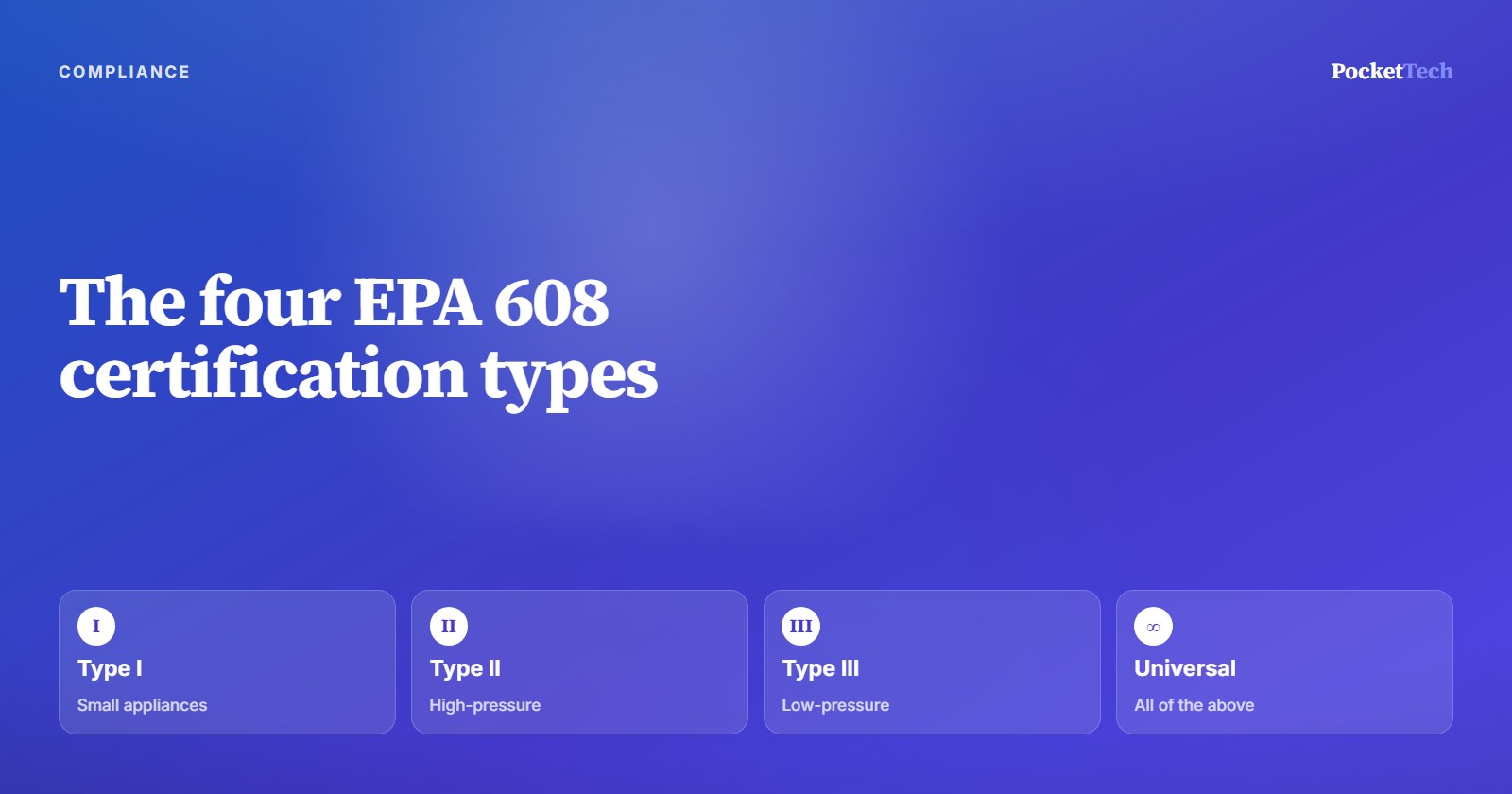
Section 608 of the Clean Air Act breaks into four certification types, and here’s the part that trips people up: the difference is entirely about the equipment, not the refrigerant.
The four EPA 608 certification types
| Type | Covers | Typical equipment |
|---|---|---|
| Type I | Small appliances | Window/room AC, PTACs, dehumidifiers, vending machines |
| Type II | High- & very high-pressure appliances | Residential & light-commercial split systems, heat pumps, rooftop units, supermarket racks |
| Type III | Low-pressure appliances | Centrifugal chillers |
| Universal | All of the above | Any 608-covered equipment |
Type I: small appliances
The EPA defines a “small appliance” as anything fully manufactured, charged, and hermetically sealed in a factory with 5 pounds or less of refrigerant. That’s window and room air conditioners, PTACs and packaged terminal heat pumps, home refrigerators and freezers, dehumidifiers, under-counter ice makers, vending machines, and drinking-water coolers.
Type II: high-pressure (the one most HVAC techs need)
Type II covers high- and very high-pressure appliances, everything except small appliances and motor-vehicle A/C. This is the bread and butter of residential and light-commercial HVAC: split systems, heat pumps, rooftop units, and supermarket refrigeration racks. If your techs work on residential and light-commercial cooling, Type II is the floor.
Type III: low-pressure (chillers)
Type III covers low-pressure appliances: think centrifugal chillers running low-pressure refrigerants like R-123 (and historically R-11). Unless you service large commercial chiller plants, most residential and light-commercial shops never touch Type III.
Universal: all three
Pass all three exams and you’re Universal-certified: you can service any 608-covered equipment. For a growing shop, Universal is usually the smart default: one credential covers every tech for every job.
It’s the equipment, not the refrigerant
The most common mix-up: techs assume the refrigerant (R‑410A vs R‑22 vs the newer A2Ls like R‑454B) decides the certification. It doesn’t. The EPA requires 608 certification based on the type of appliance, Type I/II/III/Universal, regardless of which refrigerant is in it. A newer refrigerant doesn’t change which 608 type you need (though A2Ls carry their own separate safety and handling training requirements).
Buying refrigerant
Since the 2016 refrigerant sales restriction, the seller must verify that the buyer is a certified technician or employs one. In practice, your certified status is what unlocks purchasing, and your employer can send a coworker to pick up refrigerant, or have it delivered, as long as the technician actually doing the work holds the right certification.
So which type should your techs hold?
- Residential / light-commercial HVAC: Type II at minimum; Universal preferred.
- Appliance or PTAC-only work: Type I is enough.
- Commercial chiller plants: Type III (or Universal).
- A mixed or growing shop: standardize on Universal and stop thinking about it.
The certification itself never expires, but your proof of it does the moment a card goes missing or a new hire “definitely got certified somewhere.” Here’s how EPA 608 renewal and documentation actually works, and the full picture in the HVAC compliance handbook.
Keeping it straight across a crew
With a dozen techs, “who holds Type II versus Universal, and where’s the card?” becomes a real dispatching question. Send the wrong tech and the job legally can’t be done. That’s exactly what PocketTech’s compliance tracking is built for: one record per credential per tech, with the type, expiry, and a scanned copy attached, plus reminders before anything lapses. See how to track EPA 608 and license expirations.
Frequently asked questions
What is the difference between EPA 608 Type I and Type II?
Type I covers small, factory-sealed appliances with 5 lbs or less of refrigerant (window units, PTACs, dehumidifiers). Type II covers high- and very high-pressure appliances like residential split systems, heat pumps, and rooftop units. Most HVAC service work requires Type II, not Type I.
How many types of EPA 608 certification are there?
Four: Type I (small appliances), Type II (high-pressure appliances), Type III (low-pressure appliances), and Universal, which covers all three.
Can you buy refrigerant with a Type I certification?
Yes. Since the 2016 sales restriction, a seller only needs to verify the buyer holds a Section 608 certification (any type) or employs a certified technician. A Type I certification qualifies you to purchase, but you should only service the equipment your certification actually covers.
How do I get EPA 608 Type II certification?
Pass the EPA-approved Type II exam (the core section plus the Type II section) through an EPA-approved certifying organization. Once you pass, the certification doesn't expire, but keep your proof of it on file.